

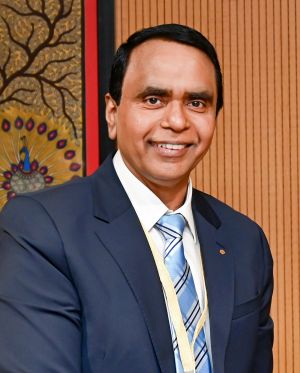
Greetings from BSG Chairperson Mr. Vishesh Gupta
Dear Readers,
“Today, some of the world’s best-known and most important lakes are a shadow of what they were just a few decades ago,” says Dianna Kopansky, who heads UNEP’s Freshwater Ecosystems and Wetlands Unit. It’s a stark line, and it stayed with us while putting this issue together. That gap between what a lake was and what it’s become is what this issue is really about.
We wanted to explore that whole arc: how a lake lives, how it dies, and what it actually takes to bring one back. We found that the clearest way to tell this story was not through data alone, but through the waters of Puttenahalli Lake in Bengaluru and the journey of Ms. Usha Rajagopalan. A writer first, Ms. Rajagopalan became a conservationist when her local lake needed a voice, eventually becoming a founding trustee of the Puttenahalli Neighbourhood Lake Improvement Trust (PNLIT). We are deeply grateful to her for serving as our guiding voice for this issue, generously sharing her insights and lived experience.
Her story matters to us for a specific reason. Every sustainability initiative we run at BSG, at its core, is a bet on the same idea: that real, lasting change doesn’t start at the top. It starts with ordinary people deciding to act together. Ms. Rajagopalan, a resident, looked at the dying lake and, instead of waiting for someone qualified to fix it, gathered a few neighbours who felt the same pull. What they built together over years of persistence remains one of the most compelling examples of sustained grassroots stewardship.
We hope this story stays with you as deeply as it has with us.
Warm Regards
Vishesh Gupta
Chairperson, Bharat Soka Gakkai
Freshwater habitats occupy less than 1% of the planet’s surface, yet they support at least 10% of all known species. Lakes sit at the heart of these ecosystems: they sustain biodiversity, recharge groundwater, moderate floods, and support the livelihoods of millions.
What does it actually take for a lake to die — and what does it take to bring it back to life?
A lesser-known reality of aquatic ecosystems is their finite lifespan. Naturally, these bodies undergo an aging trajectory—gradually accumulating silt and organic debris over centuries or millennia before transforming into wetlands and terrestrial soil. Yet, urban expansion and chemical discharge drastically accelerate this natural decay, collapsing a multi-generational cycle into a mere couple of decades.
When it worksThe Cycle of Health
Rain falls on nearby roofs, parks, and soil
|
Free-flowing channels — traditionally ‘naalas’ — carry that water to the lake
|
Marsh plants trap silt and absorb toxic chemicals
|
Fresh, oxygen-rich water keeps fish and ecosystems healthy, recharges groundwater, and cools the neighbourhood
(Source: Aquatic Environmental Services, Inc)
When it breaksThe Cycle of Decay
Paving, encroachment, and blocked channels cut off the lake’s natural inflow. Whatever water remains just sits, instead of flowing through and flushing out
|
Sewage and runoff pour into that stagnant basin, and — with no fresh inflow to dilute or carry it away — nutrients build up fast
|
Nutrient overload triggers a bloom of blue-green algae (cyanobacteria) across the surface
|
The bloom blocks sunlight and consumes oxygen, suffocating fish, plants, and other life
|
Dead matter sinks and piles up, filling the basin faster than nature intended — the lake shrinks toward marsh and swamp, a centuries-long ending arriving in years
(Source: Nat Geo)
The symptoms accumulate over years until the lake can no longer perform the very functions that made it indispensable. But the story doesn’t always end in loss — multiple communities, scientists, and local governments have shown that even severely degraded lakes can recover. One story shows what that recovery actually takes, start to finish.
Puttenahalli Lake, Bengaluru
What one neighbourhood built, over fifteen years, by simply deciding to care. Puttenahalli is a small, 13-acre lake in JP Nagar, Bengaluru. By the mid-2000s it had been reduced to a dumping ground for garbage and construction debris. Ms. Usha Rajagopalan, a resident and writer who calls herself a “conservationist by chance,” began a public campaign in 2008 to save it. That campaign grew into the Puttenahalli Neighbourhood Lake Improvement Trust (PNLIT), a group of ordinary residents who took on the lake’s care themselves.
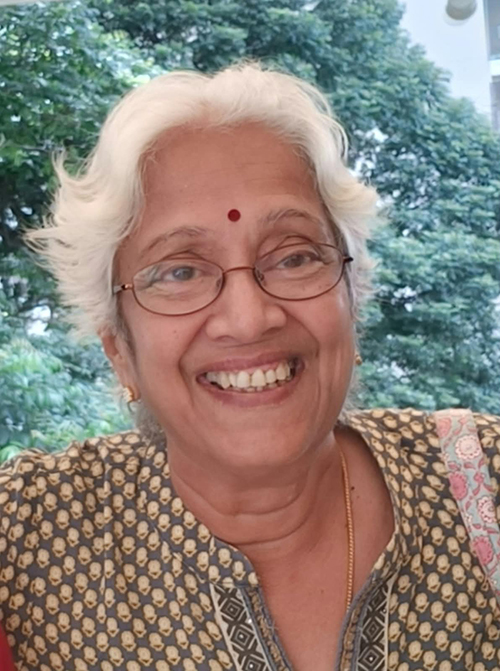
Ms. Usha Rajagopalan
Writer and lake conservationist, Puttenahalli Neighbourhood Lake Improvement Trust
Bengaluru
|
|
|
||||||
|
|
|
None of PNLIT’s volunteers were trained environmentalists. If anything, that helped. Ms. Rajagopalan notes:
“We were driven purely by concern for the lake in our locality, not by self-interest or financial considerations. We knew that change would not happen overnight; that convincing the authorities would take time. So would building trust in the neighbourhood. We looked at every challenge as one more hurdle to cross to reach the goal. What kept us motivated was the small gains – sighting a new bird, a tree flowering for the first time, even someone disposing of their litter responsibly into the dustbin and not dropping it to the ground.” — Ms. Usha Rajagopalan
The unglamorous work never stopped: keeping the premises clean, fixing pumps, maintaining the fountain, following up patiently with officials again and again. In 2025, that chapter changed — following a notice from BBMP, PNLIT had to step back from its formal role in maintaining Puttenahalli, a shift that several other citizen-run lake trusts across Bengaluru faced around the same time. Yet, while administrative frameworks may shift, the institutional memory, citizen vigilantism, and deep sense of community ownership that revived Puttenahalli in the first place remain as vital as ever.
For Ms. Rajagopalan and PNLIT, the response wasn’t to walk away from the lake but to widen the effort.
“All that we were trying to do was ensure that the lakes that had managed to survive the rapid urbanization of the city were safe and protected for the future. It was our responsibility as citizens. Last year we came together to form the Federation of Bengaluru Lakes.” — Ms. Usha Rajagopalan
In 2025, citizen lake groups across Bengaluru came together to form the Federation of Bengaluru Lakes. Ms. Rajagopalan is also writing the fuller story down. Namma Puttakere: The Making of a Lake and of a Community, a crowdfunded book releasing this December, gathers years of memories and photographs from residents. “Through this book I hope to secure statutory protection for Puttenahalli and, in time, for all the lakes in the city.”
This isn’t just Puttenahali
There are several lakes in the country that need urgent attention. Some more are listed below.
Bellandur & Varthur, Bengaluru
It was once infamous for toxic foam and surface fires. Decades of untreated sewage overloaded the water. Recovery now depends on active administrative support and citizen groups. Read more here.
Najafgarh Jheel, Delhi–Gurugram border
A vital habitat for migratory birds, straddling Delhi and Haryana, still awaiting wetland status after 12 years, as disrupted drainage and an unresolved interstate dispute leave its future undecided. Read more here.
Neglect compounds in silence, but a community that refuses to turn away creates its own momentum. The future of the planet will be saved by ordinary people looking at the world with a watchful eye and an unyielding mind.
“Go for it. Lakes need to be saved and protected for our own wellbeing. It is a difficult task — but worth far more than you can ever imagine.” – Ms. Usha Rajagopalan

Citizen Science
Citizen science refers to research or monitoring work where everyday people, not professional scientists, take on the task of observing, measuring, and recording information about the world around them. It’s how ordinary residents end up tracking bird counts at a local lake, or logging water quality data, without needing a science degree to do it.
To stop this from happening, sustainable policymaking must focus on “just adaptation.” This means designing solutions with fairness at their center, openly recognizing that marginalized communities – who did the least to cause environmental crises in the first place – are always the ones left most exposed to their dangers. True development cannot be built by cutting corners or ignoring the vulnerable; our remedies must protect everyone equally.
(Source: Nat Geo)
 To Read
Bengaluru lakes: A trickle of renewal, a long way ahead
A look at Bengaluru’s lake restoration efforts, contrasting the grassroots momentum of community-led revivals with the overwhelming systemic threats of ongoing urban expansion, sewage discharge, and weak governance.
“Among the Trees”: a poem by Mary Oliver
An inspiring reflection on interconnectedness, inviting readers to experience a sense of wonder and deeper appreciation for the natural world.
Six Eye Opening Great Lakes Facts
The Nature Conservancy breaks down why the Great Lakes matter—not just as economic and drinking water lifelines for 40 million people, but as globally unique havens for biodiversity, coastal dunes, and local folklore.
 To See
What are wetlands?
Did you know that 35% of global wetlands have disappeared since 1970? In this short 2-minute video by WWT, take a quick visual tour of these vibrant ecosystems that purify our water and shelter millions of species, and discover how community-led restoration can bring them back to life.
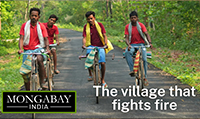
The Village that Fights Fire
What happens when communities gain legal rights over their landscapes? In Bastar, Chhattisgarh, receiving Community Forest Resource rights transformed how villagers manage over 3,000 hectares of forest. Watch Mongabay-India’s documentary short to see how local patrols and collective responsibility are successfully keeping wildfires at bay.
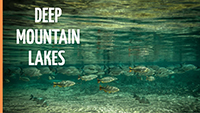
The Fascinating Wildlife in Deep Mountain Lakes – A Documentary
From glacial runoff high in the Alps to deep, ancient lake beds, freshwater ecosystems host some of the most specialized wildlife on Earth. This high-quality documentary offers a rare underwater look at how lakes, rivers, and flooded forests sustain everything from carnivorous plants to ancient fish species.
 To Listen

Dr. Jane Goodall: ‘When nature suffers, we suffer’
In this 11 min interview, legendary conservationist Dr. Jane Goodall discusses why true conservation must be community-driven, how youth action creates lasting change, and why holding onto active hope is essential for environmental resilience.

Dr. Harini Nagendra: Bangaluru’s Lakes, Taiwan’s Waste, and Balancing Urban Ecology
In this WRI India podcast, Dr. Harini Nagendra, Director of Research & Centre for Climate Change at Azim Premji University, examines the critical link between ecology and urban well-being. Focusing on Bengaluru specifically, she shares the importance of adopting a “nature focused” lens for urban planning.
SGI Founding President Daisaku Ikeda shares in Discussions on Youth, “Life is a chain. All things are related. When any link is harmed, the other links are affected. We should think of the environment as our mother, Mother Soil, Mother Sea, Mother Earth. There is no crime worse than harming one’s mother.”
We think of our planet as a place we live, or a set of resources we use, or, at best, something we’re responsible for protecting. A mother is different. We don’t protect a mother out of duty. We love her, plainly, and that love isn’t something we reasoned our way into. It is born naturally out of the connection we’ve been bound by since birth.
“Starting with a proper understanding of human existence, we must design and create completely new relationships with the cultural and natural environments that support our lives.” President Ikeda writes in his novel, the New Human Revolution, Vol 15. This understanding has to be rooted in one fact: we were never separate from nature to begin with. We were not placed on this earth to live alongside it. We were born of it, sustained by it, and remain bound to it at every moment, the way a child remains bound to a mother long after growing old enough to forget it.
So protection isn’t about responsibility at all. It’s about feeling. Take a moment to reflect: when did you last feel wonder at the colours of a butterfly, or awe at how a river flows from high ground to low, or simple gratitude for every breath we draw, and for the chance to witness this endlessly astonishing world? Only when that reverence returns to our everyday conscience can our connection to the natural world begin to feel alive again.
A mother, after all, is the source of life itself. When that source is disturbed, every being that depends on her inevitably suffers too. In the same novel, President Ikeda writes, “The real issue facing humanity was the degradation and pollution of air, water and land on a global scale. It was a problem that exceeded the moral responsibility or efforts of a single person or company, a threat to the entire human race from which no one was safe, not even the perpetrators.” “Not even the perpetrators” is a key understanding. There is no wall high enough, no wealth great enough, no distance far enough to place anyone outside this. A wound to the earth is a threat to all life. That is how intimately we are connected.
In an age of rapid urbanization, as children of Mother Earth and lovers of the natural world, this is precisely where our diligence has to begin: noticing harm clearly enough, and caring deeply enough, to act on what we notice. Further in the novel, President Ikeda calls on individuals to form citizen groups and put on the glasses of “pollution investigators”- people willing to crouch down at the edge of their own street, their own drain, their own patch of dying green, and look closely at what everyone else has trained themselves to walk past.
So we’re left with a harder question than how much we are protecting. The question now is closer to this: how much of what we call care is still duty, still something we’re managing, still something we could, if we were honest, walk away from? And how much of it has become instinct, the kind that doesn’t wait for consensus, and doesn’t need to be reasoned into?
As the climate crisis deepens, the questions of environmental protection can no longer remain an outward inquiry. It has to turn inward, and it has to turn urgent.
Planting a Million Lives: How I Transformed my Grief into a Movement for Life Ms. Veenu Mansharamani | Women’s Division | Delhi

My mother always taught me that love is best expressed through action, and my family – my husband, our two children, and I – built our lives around that belief. In 1995, our bond was tested when my mother was diagnosed with cancer, bringing us even closer together as we rallied around her. Both my sons stood by our side throughout.
My elder son, a budding interior designer, was filled with immense creativity, joy, and a passion for life. He was deeply devoted to the family and loved by every relative and friend who knew him. Yet he faced severe health battles of his own. Diagnosed with juvenile diabetes, he later developed heart and kidney complications. We spent years watching him endure painful struggles, often seeing him gasping for breath in his final years. In October 2014, at the age of 36, he passed away, leaving behind a void that felt impossible to fill.
The year following his passing was excruciating, but the most difficult moment came ten months later, as his birthday approached. He had always loved celebrating his birthdays, turning them into lively occasions with everyone he held dear. Without him, we were at a complete loss, searching for a meaningful way to honour his memory.
After deep reflection, an idea took hold. Instead of mourning in silence, we decided to mark what would have been his 37th birthday by giving back the very thing he had fought for in his final days: breath. We had watched him struggle for oxygen so many times that planting trees — nature’s life-giving lungs — felt like the most fitting tribute. Our goal was simple: save one life with every tree planted.
We reached out to 37 friends and family members across the world, inviting them to plant a tree in his memory on August 9th. About two weeks before his birthday, my younger son, himself an environmentalist, sent out the invitations, and the response was overwhelming. Everyone embraced the call, and by the end of that first year, we had surpassed our original goal, planting over 100 saplings around the globe.
What started as a single act of remembrance quickly grew into a lifelong movement we call “Plant a Million Lives.” We expanded the principle to honour all of life’s major moments:
- Welcoming new beginnings: whenever a new life enters our family or circle of friends, we go out and plant a tree.
- Honouring lost loved ones: whenever we lose someone dear, we plant a tree so their memory continues to live and breathe through nature.
- Marking milestones: on the first anniversary of my husband’s passing, we distributed 100 saplings to everyone who came to honour his memory, spreading life to all who attended.
Over the years, the movement gained real momentum. Organisations partnered with us, and friends took the cause into their own hands. A close friend, designing landscapes for a resort in Goa, planted nearly 1,000 trees near the property on our behalf.
What has carried this movement through every stage is something my faith as a member of Soka Gakkai has taught me: that care, however small, begins as a seed sown quietly in one’s own mind. It is invisible at first, asking nothing of anyone else to notice it. But once that seed is truly planted, it doesn’t stay contained. It grows roots, puts out branches, and eventually reaches far beyond the place it started. I’ve come to believe that every tree we’ve planted in the world began, in some sense, as a smaller seed planted within us first.
Wherever my younger son and I travelled – whether for his work or on personal holidays together – we made it a priority to bring saplings along, or to arrange for trees to be planted on the grounds of the hotels where we stayed. Every trip became an opportunity to give something back to the earth.
Between 2015 and 2026, our grassroots efforts have planted over 18,000 trees across the globe. We’re still far from our ultimate goal, but beyond the environmental impact, this journey has been a profound source of healing and unity for us. It transformed our deep personal grief into a living legacy of hope, connecting our family and friends around the world through a shared commitment to nurturing the planet.
My movement “Plant a Million Lives” stands as proof of the power of love over loss. It shows that even in the wake of heartbreaks we can cultivate new growth, ensuring that every breath lost is honored by giving life back to the world.Towards 2030, the year the SDGs are meant to be achieved and Soka Gakkai marks its 100th anniversary, I am determined to plant a million trees all over the world.
 SDG Tip for Daily Life
Sustainability is in noticing what’s around you. Here are three small ways to bring that awareness closer to home:
- Find your nearest water body. Most of us can name the closest mall or metro station, but not the lake, pond, or wetland nearest to where we live. Look it up, and find out if it has a citizen group looking after it.
- Mind what goes down the drain. Cooking oil, paint, chemicals, and excess fertilizer often end up in a nearby water body, feeding the same pollution cycle explored in this issue.
- Report what you notice. Most Indian cities now have an app for this — the Swachhata app nationally, or a city-specific one. A blocked drain or dumping site reported through one of these takes minutes.

Updates
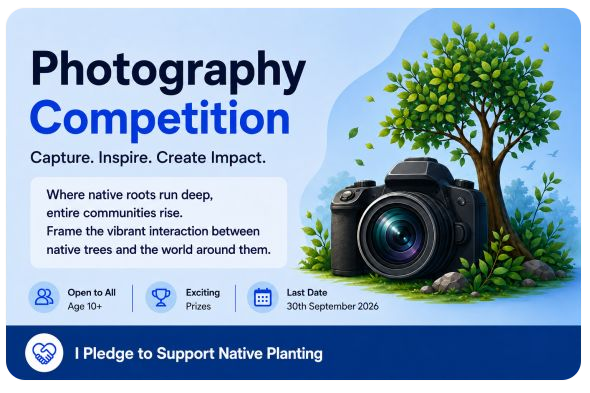
“Roots in Focus”: National Photography Competition (A Joint Initiative by BSG and Nature:Re)
Step outside, observe, and photograph a local native tree or sapling that is actively supporting its environment. Open to all students, professionals, and nature enthusiasts! Accessible on the BSG for SDG app.
Download the BSG for SDG app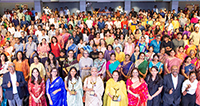
6th BSG Women’s Symposium – “The Century of Women Starts with Me: From Awareness to Action”
At its heart, the Symposium asked one question: how can women remain the protagonists of their own lives, and help others do the same? Bringing together over 1,000 participants, the event created a space for reflection on how individuals, families and communities can help build a more equal future.
Read more
BSG has now Successfully Held 305 SOHA Exhibitions
The ‘Seeds of Hope and Action (SOHA): Making the SDGs a Reality’ exhibition has travelled to 285 destinations across the country, including: Chandigarh, Amritsar, Jaipur, Delhi, Karaikal, Gangtok, Kalimpong and Hurda, Rajasthan.
Read moreContact Us
 Any queries or suggestions regarding the newsletter can be addressed to sdg@bharatsokagakkai.org
 To know more about the ‘BSG for SDG’ initiative, visit the BSG for SDG website
 Download the ‘BSG for SDG’ mobile app with the carbon footprint calculator