


Greetings from BSG Chairperson Mr. Vishesh Gupta
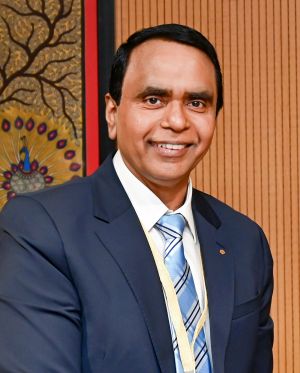
Dear Readers,
At the start of this year, I wish each of you good health, steady hope, and days that feel full rather than hurried.
There was a time when slow and steady really did win the race. Waiting was part of life. Waiting for photos to develop. Waiting for a letter or a phone call that might come in the evening. Waiting, even, to want something badly enough to go out and get it.
Much has changed since then, and in many ways for the better. Technology has lifted burdens, expanded access, and opened possibilities that previous generations could not have imagined. Time has been saved. Distances have collapsed. Lives have, undeniably, become easier in important ways.
Still, some questions follow us into this new year. When so much is designed to arrive instantly, what happens to the habits that are formed slowly? When effort is no longer required in small, everyday ways, where can we practice patience, judgment, and care? And as our lives speed up, what does that pace ask of the world that supports us?
We are living through a moment when the natural world is signalling its limits more clearly than before. Seasons out of step, ecosystems under pressure, and many kinds of human suffering that can no longer be ignored. These changes are tied, in many ways, to how we live, consume, and move. Progress may be unstoppable, but how we travel with it is still a choice.
There’s the growth that rushes ahead and can look impressive. Then there’s the growth that takes root, strengthening character, deepening judgment, and nurturing care for others. It understands that what is forced may expand quickly, but what is tended endures.
The new year is another chance to continue the effort, look again and deepen our roots in the wellness of society. To my mind, 2026 is not a clean slate. This year, we stay with the work.
Warm Regards
Vishesh Gupta
SGI Vice General Director & BSG Chairperson
Convenience culture is the social habit of designing everyday life around speed and ease. Instant purchases, taking short vehicle rides for walkable distances, choosing disposable items because washing or storing reusables feels inconvenient – all make up for examples of this kind of living.
In India, the government has recently directed quick-commerce platforms to drop 10-minute delivery promises, after concerns that such timelines created unsafe pressure on delivery workers and compromised their wellbeing. Groceries, meals, medicines and daily essentials can be ordered multiple times a day, often without planning ahead. What used to be weekly or monthly shopping has become frequent, fragmented consumption.
There’s no denying that convenience supports our lives in many real ways. But leaning on it too heavily can be dangerous. It’s interesting to note that tasks we once handled ourselves, now feel burdensome. Small efforts are disappearing. And with them, our chances to stay active, build connections, and care for the world around us.
Living well requires technological progress but also requires restraint. Identifying that convenience culture trains us to live with less effort, less patience and less pause is critical for all who care for people and the planet. The costs of comfort are rarely obvious or immediate. They are spread out, hidden behind smooth experiences. In the next section, we look more closely at how this new age of ease is altering everyday life.

After the click
Materials & energy
Every fast delivery comes with packaging. India’s e-commerce sector generated close to 98,000 tonnes of plastic packaging waste in 2021, much of it designed for one-time use. Globally, packaging accounts for 40% of all plastic waste produced. Plastic is only part of the picture. Cardboard boxes, paper wraps, insulation materials and thermal bags are also used once and discarded.
Ultra-fast delivery depends on dense networks of warehouses, refrigeration, data centres and vehicles operating continuously. The pressure to deliver instantly means vehicles frequently leave with only a few orders, increasing both carbon emissions and urban congestion.

Behind the speedLabour systems
What feels effortless to the consumer often relies on intensified labour. Delivery timelines are maintained through algorithm-based systems that track routes, time and performance in real time.
Workers absorb the pressure of speed, navigating traffic, weather and long shifts, so that the service appears seamless. There are also warehouse staff sorting orders through the night, customer support teams maintaining 24-hour service, and logistics workers ensuring continuity without pause. The effort is real, but largely invisible to the end user.

Over timeConsumption habits
Convenience also changes how we consume. Buying now requires fewer steps: one click, instant payment, fast delivery. People tend to buy more frequently and with less deliberation.
Research shows that lowering friction increases impulse purchases. This doesn’t mean people are irresponsible. It means systems are designed to reduce pauses. The result is higher volumes of low-value, short-life consumption moving quickly through the economy.

Inside the mindCognitive shifts
Many convenience-driven systems are designed to reduce what behavioural scientists call cognitive load. It is the mental effort required to make decisions, plan ahead or tolerate uncertainty. Fewer steps, fewer delays and fewer choices mean the brain expends less energy in the moment.
When systems consistently remove the need to plan, wait or persist, the brain adapts by relying more on external prompts and less on internal regulation. Decisions move from being actively made to being passively triggered by notifications, recommendations or default settings.
Gradually, this can narrow the range of situations in which effort is practised. It’s not that effort is avoided; it’s just no longer required as often. The result is a dependence on systems to do most of the work for us.
Noticing the Default in Everyday Life
Noticing these defaults is a first step. Asking why something is designed the way it is – why speed is rewarded, why effort is hidden, why pause is removed – opens up space for different, more conscious choices. Over time, this saves us from decision fatigue, impulse-driven regret, and the environmental damage that comes from rushed, unexamined choices.

Choice Architecture & Nudge Theory
The way options are arranged, presented, or structured in a system like a menu, an app, or a store layout can subtly influence what people choose. Defaults, visibility, and order all make some behaviours easier or more likely, while others require more effort. In sustainability, choice architecture explains why convenience often feels automatic. A nudge is a gentle prompt or design that steers behaviour without taking away freedom of choice. Nudges can encourage positive habits. For instance, placing reusable bottles prominently. Or mislead, such as highlighting a discount on a product that is cheap or convenient but harmful to the environment. In both cases, nudges show how small design choices can shape decisions at scale.
Source: Medium
 To Read

How Kirana Stores are Coping as Quick Commerce Grabs 30% of their Market
Traditional neighbourhood kirana shops in India are facing significant pressure as quick commerce platforms capture an increasing share of their market.

What’s Friction-maxxing?
The article playfully examines the idea of “friction-maxxing”, asking where we should really draw the line between helpful convenience and mindless ease.

Green Quick Commerce: Can Speed and Sustainability Co-exist?
The article asks whether faster delivery can ever be sustainable, and suggests that only intentional choices by companies and consumers can reduce its environmental cost.

How to Stop Wanting More Stuff
A practical guide on how to slow down purchases, reduce wasteful consumption and lead healthier financial and environmental habits.
 To See

The Sachet Economy: Nigeria’s Affordable Convenience or Environmental Challenge?
Small, individually packaged products (like tiny sachets of shampoo or detergent) began as convenient and affordable options for people with limited income, but over time have become widespread due to economic pressures.
Throwaway Culture is Destroying Us
How did the world of disposables come around and how do we fix it?

Can Clean Energy Handle the AI Boom?
The most convenient and useful tool today is AI. Yet it has an environmental impact hard to deny. How can we live with AI and still prioritise a sustainable future?
 To Listen

Impact Dialogues | The Cost of Convenience
More consumerism means more waste. How can we navigate the realities of the 21st century more consciously?

Is Degrowth the Solution to Climate Change?
The pros and cons of ‘degrowth’ in a climate-altered world.
 To Play
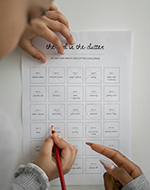
Create a simple bingo grid with actions like:
- “Waited instead of ordering”
- “Carried something instead of buying disposable”
- “Walked instead of taking the car”
- “Fixed something small”
Share the bingo card with friends and family. Tick boxes over a month to record your habits.
Turning to convenience is slowly becoming our basic life tendency. We reward systems that save time, remove friction, and make life easier. Ease feels like progress, and in many ways, it is. But when convenience becomes the organising principle of everyday life, it begins to shape more than habits. It shapes who we become.
The pursuit of ease often disconnects us from effort. And effort is what sharpens our ability to adapt, to respond, to overcome challenges, to stay engaged even when difficult.
SGI Founding President Daisaku Ikeda, in his 2006 Peace Proposal, observes:
“The process of modernization has changed the way the individual interacts with the social and natural environment, as ties of relation with family, neighborhood and other communities unravel.”
President Ikeda cautions that this erosion of ties can lead to something deeper and more troubling:
“…this can lead toward the kind of unbridled individualism where untrammelled desire takes control.”
Unbridled individualism thrives in a culture that prioritises ease above all else. It is profitable, efficient, and endlessly customisable. But it also narrows the self, detaching individual life from collective well-being.
President Ikeda offers a clear counterpoint in the same Peace Proposal: the idea of the robust individual. President Ikeda writes, “To avoid a slide into unbridled individualism, what is needed is to develop a robust character that can confront the changes in our society without becoming ensnared in greed and selfishness”. A robust individual would strive to be rooted in society, in relationships with others, and in shared and mutual concerns.
Effort, then, is not a burden to be eliminated. It is a source of dignity. It is how we remain participants in life rather than passive beneficiaries of systems designed for ease.
In striving to become more robust individuals, it may be useful to pause and reflect on the following:
- Where has convenience replaced effort in my life?
- What effort once connected me to others, but now feels optional?
- In choosing ease, what capacities might I be slowly losing?
Ease has its place, but a life without effort risks losing the very qualities that make it human.
Choosing Responsible Action Every Step of the Way Kiaan Sabharwal | Future Division | Delhi

My name is Kiaan and I am 10 years old. I have been a voluntary member of Bharat Soka Gakkai for the last five years.
I carry a steel water bottle whenever I go to school, the market or the mall. My family also uses jute bags for buying groceries, fruits and vegetables. I learned this habit by watching my mother and through the BSG for SDG mobile app. My mom always carries her own bag and never takes plastic bags from hawkers, so I started doing the same.
I noticed that when people feel thirsty outside, they simply buy plastic water bottles because it is easy and convenient to do so. Sometimes these bottles end up on the road, and it makes our Mother Earth dirty. Carrying my own bottle helps me avoid that.
When I talk to my friends and family about using less plastic, many of them appreciate it. Some people follow it, some don’t, but I keep trying. Doing these small things makes me feel happy because I know I am helping the planet in my own way.
I also reuse stuff like cans and plastic boxes to make cool things. It’s fun and eco-friendly!I feel I am growing more creative and I can encourage my friends to become more sustainable through my art.
When I do all this, I feel proud and happy. I feel I am able to live out SGI President Daisaku Ikeda’s vision for a truly just and sustainable world. I believe that if we all do small things like this, together we can help our Mother Planet.
Changing the Default Settings of a Classroom Gitika Goel | Women’s Division | Chandigarh

I am Gitika Goel, a voluntary member of Bharat Soka Gakkai since 2007.
In my professional work with young children since 2017, sustainability is not approached as a separate lesson but is consciously woven into everyday classroom practices. I strongly believe that meaningful environmental responsibility begins with mindful daily choices, and this belief guides the way my learning spaces are designed, resourced and maintained.
Eight years ago, a growing concern about environmental impact, particularly the number of trees cut down to produce paper that is often used briefly and discarded, made me pause. Buying fresh paper had always been the default in classrooms, something I had never been asked to question. That moment of awareness led me to consciously stop purchasing new paper reams altogether and rely only on recycled paper instead. Since then, all paper used in the classroom has been recycled, collected from previously used sheets, discarded materials and repurposed resources.
Often, I stamp or write small reminders such as “Recycle Paper” on these sheets as a gentle cue to reinforce mindfulness in class. Over time, this practice significantly reduced paper waste and naturally encouraged more thoughtful use of what was already available.
In addition, paper scraps, used toilet paper rolls and various packaging materials are regularly reused for art, construction and craft activities. Old pillow covers have been repurposed as aprons for children during messy art and sensory work, eliminating the need to purchase plastic-based alternatives. Cardboard courier boxes are a regular source of craft material, discarded tyres have been reused as sturdy stools, and leftover wooden packing materials have been transformed into low tables and functional classroom furniture.
These choices serve a dual purpose. They reduce environmental impact while fostering creativity, problem-solving and environmental awareness among children. Over time, I noticed children becoming more conscious of how they used paper and other materials – avoiding unnecessary wastage and finding their own ways to reuse what was available. Many carried these habits beyond the classroom, influencing their families to reuse paper and pause before discarding everyday items.
By observing and participating in these practices, children learn that sustainability is not complex or abstract. It is achievable through simple, thoughtful actions embedded in everyday life.
Through this approach, the classroom becomes a living example of sustainable living, demonstrating that responsible use of resources, creativity and care for the environment can coexist naturally within educational spaces.
 SDG Tip for Daily Life

New Pauses in the New Year
Did you know: In 2020, shipping emissions from online stores accounted for 37% of the total greenhouse gases emissions.
This year we can choose to buy as little as possible. When shopping, consolidate orders and buy them together. Mending objects/clothes through local vendors or exploring second-hand stores can also be a worthwhile experience.
Did you know: Road transport currently contributes around 12% of India’s energy-related CO₂ emissions and plays a major role in urban air pollution. With rising demand for personal travel and goods movement, energy consumption and CO₂ emissions from road transport could potentially double by 2050.
Can you eliminate one car trip every week, or maybe every month this year?

Updates
Registrations Open for the BSG Half Marathon (BHM)
Run for Health. Run for Joy. Run for Friendship. BSG Half Marathon (BHM) will be held on 22nd march 2026 at JLN Stadium, Delhi. Follow bsgevents here to know more.
Register Now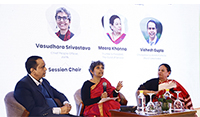
BSG at the 4th BW Disrupt Social Impact Summit & Awards 2025
Bharat Soka Gakkai (BSG) participated in the 4th BW Disrupt Social Impact Summit & Awards 2025, a national forum that brought together India’s leading changemakers to reflect on how innovation, intent, and social responsibility can come together to create meaningful impact.
Read more
BSG has now Successfully Held 269 SOHA Exhibitions
The ‘Seeds of Hope and Action (SOHA): Making the SDGs a Reality’ exhibition has travelled to 210 destinations across the country, including: Chandigarh, Amritsar, Jaipur, Delhi, Karaikal, Gangtok, Kalimpong and Hurda, Rajasthan.
Read more
BSG forms the 40th SDG Club
As part of its mission to foster young SDG ambassadors in Indian schools and colleges, BSG established the 40th SDG Club in Akshara Vaagdevi International School, Telangana
Read more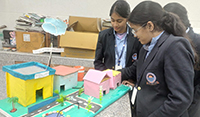
BSG’s SDG Club at MRAMP, Panchkula: Hands-On Learning for Water and Waste Solutions
The SDG Club of Moti Ram Arya Modern Public School, Panchkula, organized an awareness program which included the display and explanation of two important environmental models: Rainwater Harvesting and Waste Segregation
Read moreContact Us
 Any queries or suggestions regarding the newsletter can be addressed to sdg@bharatsokagakkai.org
 To know more about the ‘BSG for SDG’ initiative, visit the BSG for SDG website
 Download the ‘BSG for SDG’ mobile app with the carbon footprint calculator